
Productivity killer cell phone at work
How you, as an employer, regulate the issue of mobile phone use in a legally secure, fair and effective way — and why LOCKSTA is the modern alternative to the classic mobile phone ban.

Guide to mobile phone cases introduction
The smartphone — a curse and blessing in everyday working life
Hardly any other object has changed our everyday lives as fundamentally as the smartphone. It is a communication center, news portal, navigation device and entertainment machine in one. But what is a practical companion in private life can quickly become a problem at work: Employees who look at their display every few minutes, answer WhatsApp messages or scroll through social media feeds cost companies money.
There is therefore a central question for employers, supervisors and management: How do we address the issue of mobile phones at work? A general mobile phone ban? A differentiated regulation? Or are there innovative solutions that promote productivity and employee satisfaction in equal measure?
This article provides you with a comprehensive overview: from legal principles and scientific findings to specific measures that can be used to effectively manage mobile phone use in your company. We will also show why lockable mobile phone cases from LOCKSTA are a modern and tried and tested solution.verschließbare Handyhüllen von LOCKSTA eine zeitgemäße und praxiserprobte Lösung darstellen.
1. Facts and figures: How distracting is the smartphone at work?
Before you, as a decision maker, make regulations on mobile phone use, it's worth taking a look at the scientific facts. The study situation is clear — and alarming:
Mere presence is enough
A highly regarded study by the University of Texas at Austin led by Prof. Adrian F. Ward examined over 500 test subjects in three groups: One group had the smartphone on the table, another in their pocket, the third in another room. The result was clear: The test subjects whose smartphones were in a separate room scored significantly better on cognitive tests. The state of the device — whether switched on or off, silent or with sound — did not matter.
Researchers from the University of Paderborn confirmed this finding: Even the mere visibility of a smartphone ties up cognitive resources because the brain must constantly suppress the impulse to reach for the device. These resources are then missing for the actual work task.
Productivity losses due to interruptions
Research from Ulm University under Prof. Christian Montag shows a clear connection between smartphone affinity and reduced work productivity. Employees use their smartphones for an average of around 160 minutes per day — often without being aware of the duration. A study by Michigan State University goes even further: An interruption of just three seconds can double the error rate. And after every distraction, the brain needs up to 30 minutes to fully concentrate on the original task again.
86 percent of employees are distractable
A representative YouGov survey revealed that 86 percent of all employees are distracted at work, at least occasionally. In addition to conversations with colleagues, smartphones are one of the most common sources of distraction. Every tenth employee says they spend more than an hour a day doing remote work.
According to the study, the longest period without interrupting work with a mobile phone was on average almost two and a half hours — a sobering figure for employers.
2. Legal basis: Can the employer ban mobile phones?
As an employer, you naturally want to know how far your room for manoeuvre extends. The good news: German employment law certainly gives you options to regulate mobile phone use during working hours. The most important key points:
Right to issue instructions in accordance with Section 106 GewO
As an employer, you can restrict or prohibit private mobile phone use during working hours on the basis of your directorship law in accordance with Section 106 of the Trade Code (GewO). This right includes instructions on the content, place and time of work as well as on organization in the company. An instruction banning mobile phones must comply with the principle of “reasonable discretion”, i.e. take into account the interests of both sides.
Limits of the prohibition
Important to know: A mobile phone ban at work cannot be extended to breaks. During lunch breaks and rest periods, employees are generally free to decide about their activities — including using their smartphones. In addition, as an employer, you must not require employees to hand over their private mobile phones before starting work. This would improperly interfere with property rights.
Works Council and Participation
If your company has a works council, you should involve it when introducing a mobile phone ban. The Munich Labour Court ruled in 2015 that a general ban on mobile phones may be ineffective without the approval of the works council (Ref.: 9 BvGA 52/15). However, the Hessian Regional Labor Court saw this as more differentiated in 2020. In any case, a works agreement that creates clear and binding rules is recommended.
Consequences of violations
If an employee violates a clearly communicated mobile phone ban, you as an employer can issue a warning. In the event of repeated violations, this may even result in termination. The prerequisite is that the ban has been clearly communicated — ideally in writing and with confirmation from the employee.
Accessibility in case of an emergency
Even if there is a mobile phone ban, accessibility must be guaranteed in a private emergency. This can be ensured via the company's landline number, a telephone exchange or special emergency regulations. A complete ban without any alternative accessibility would be disproportionate.
3. Reasons for a mobile phone regulation in the companyHandyregelung im Unternehmen
The motivation for a clear mobile phone regulation goes far beyond the issue of distraction. As an employer or manager, you should consider the following aspects:
4. The practical problems of classic mobile phone bans
A mobile phone ban at work can be legally enforced — but in operational practice, it often reaches its limits. Many employers are familiar with the dilemma:
Difficult enforceability
Who checks whether the ban is being complied with? Supervisors who have to constantly monitor lose valuable time and put a strain on the relationship of trust with their teams. Nobody wants to take on the role of the “cell phone policeman.”
Acceptance issues
A pure ban is often met with opposition. Employees feel overwhelmed and react with incomprehension or evasive strategies. The result: The ban exists on paper, but is not consistently implemented in everyday life.
Property law limits
As mentioned, as an employer, you may not require employees to hand over their private mobile phones. The smartphone therefore remains physically with the employee — along with all temptations.
Operational exercise
If private cell phone use has been tolerated for years, a so-called operational exercise can arise. A subsequent ban is then much more difficult to enforce.
Studies from the University of Konstanz show: “Soft” bans that rely on social norms and personal responsibility are more effective for routine tasks than rigid rules with threats of sanctions.
5. The modern alternative: cellphone-free zones with LOCKSTA
This is exactly where LOCKSTA comes in. Instead of relying on bans and controls, the Frankfurt-based company offers a physical solution that keeps the smartphone safe — without taking it away from the employee.
How do cell phone cases with magnetic closure work
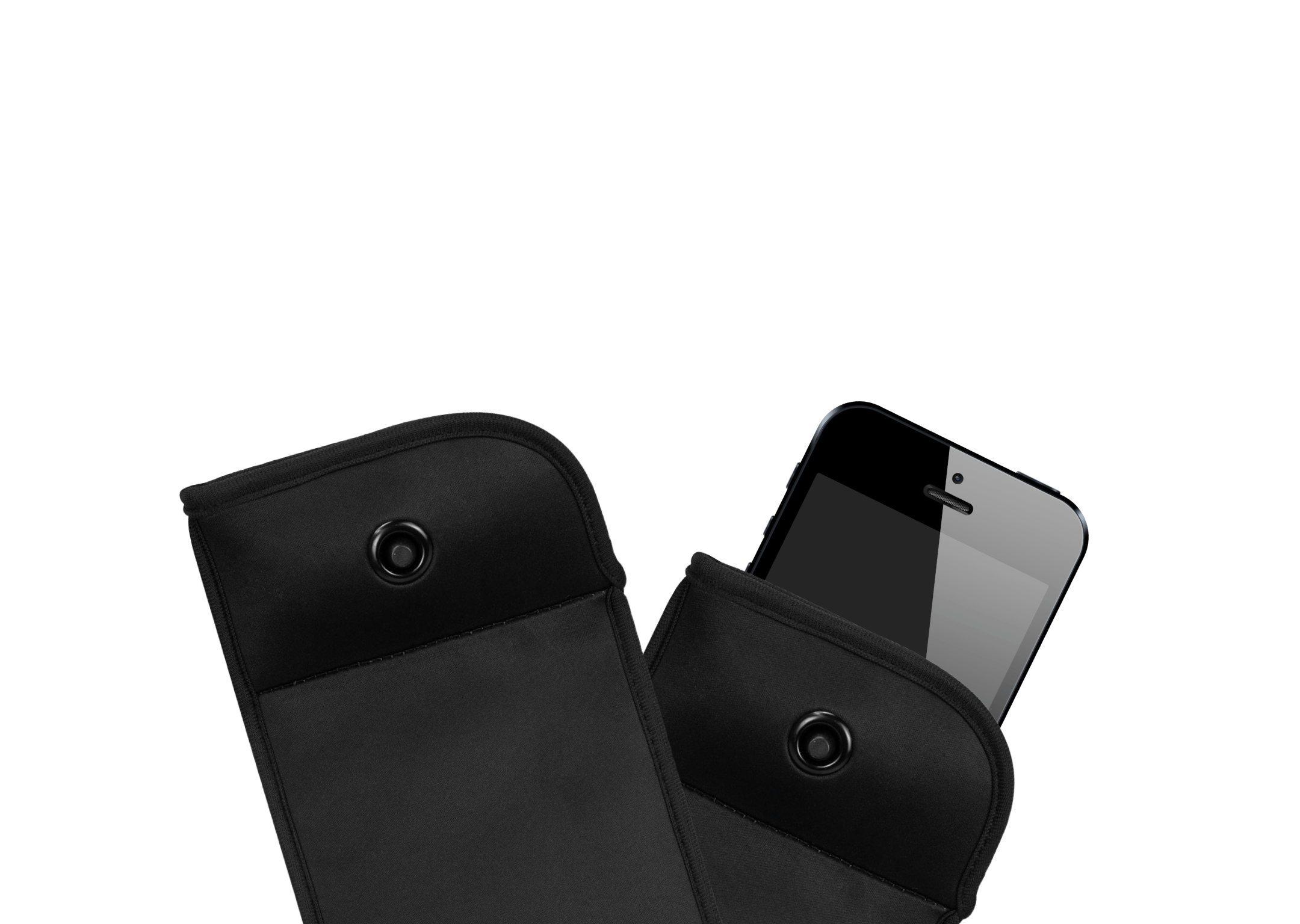
The mobile phone is placed in the LOCKSTA case and locked. It can only be opened with the special LOCKSTA Opener. In this way, students, employees or guests remain focused, conversations confidential and moments undisturbed.


Store your smartphone securely
The cell phone remains in the possession of students, employees or guests and yet distractions, attempts at fraud or photos are prevented.

Close the case with the push of a button
A simple push button closes the LOCKSTA case. The case cannot be opened within the cellphone-free zone.

Simply hold the opener to open
The opener is placed outside the cellphone-free zone (e.g. at the exit). This allows everyone to open the case independently.
6. Areas of application in companies: Where LOCKSTA makes the difference
LOCKSTA is not a flat-rate instrument, but can be used specifically where cellphone-free zones provide the greatest benefit:
meetings and workshops
Smartphones are one of the biggest distractions in meetings. With LOCKSTA, all participants store their devices securely in the case before the meeting starts. The result: more focused conversations, shorter meeting durations, and more genuine interaction. At the same time, sensitive content — such as strategy presentations or quarterly figures — is protected against unwanted photo or audio recordings.
Factory tours and factory tours
When guided through production areas, laboratories or research departments, smartphone cameras pose a significant risk of trade secrets. LOCKSTA makes it possible to securely lock visitor cell phones before the tour and release them centrally after the tour — professionally, easily and without complex security checks.
conferences and meetings
LOCKSTA provides full attention at corporate conferences, specialist events or internal meetings. No ringtones, no glowing displays, no distracted participants. Your event looks more professional and high-quality.
Sensitive areas and compliance zones
In areas with special confidentiality requirements — such as research and development, legal departments, financial areas or IT security zones — LOCKSTA provides a physical barrier against uncontrolled smartphone use. The Signal Blocking Case also blocks incoming and outgoing signals.Signal Blocking Case blockiert zusätzlich eingehende und ausgehende Signale.
Production areas and workshops
Where work safety is a top priority, smartphone distraction can be dangerous. LOCKSTA makes it possible to define production halls or workshops as cellphone-free zones without employees having to leave their devices in unsafe lockers or open shelves.
.jpg)
LOCKSTA Standard Case
The simple solution for cellphone-free zones. Lockable case with lanyard loop and space for a name tag or visitor ID.
.png)
LOCKSTA Clear Case
The display remains usable, while photos and videos only appear blurry. In this way, visitors or employees can continue to use their smartphones for communication or apps — without confidential content being unintentionally leaked out.
.png)
LOCKSTA Care Case (Medical)
Our care case is equipped with a Velcro fastener instead of the special magnetic closure.
Lockable openers
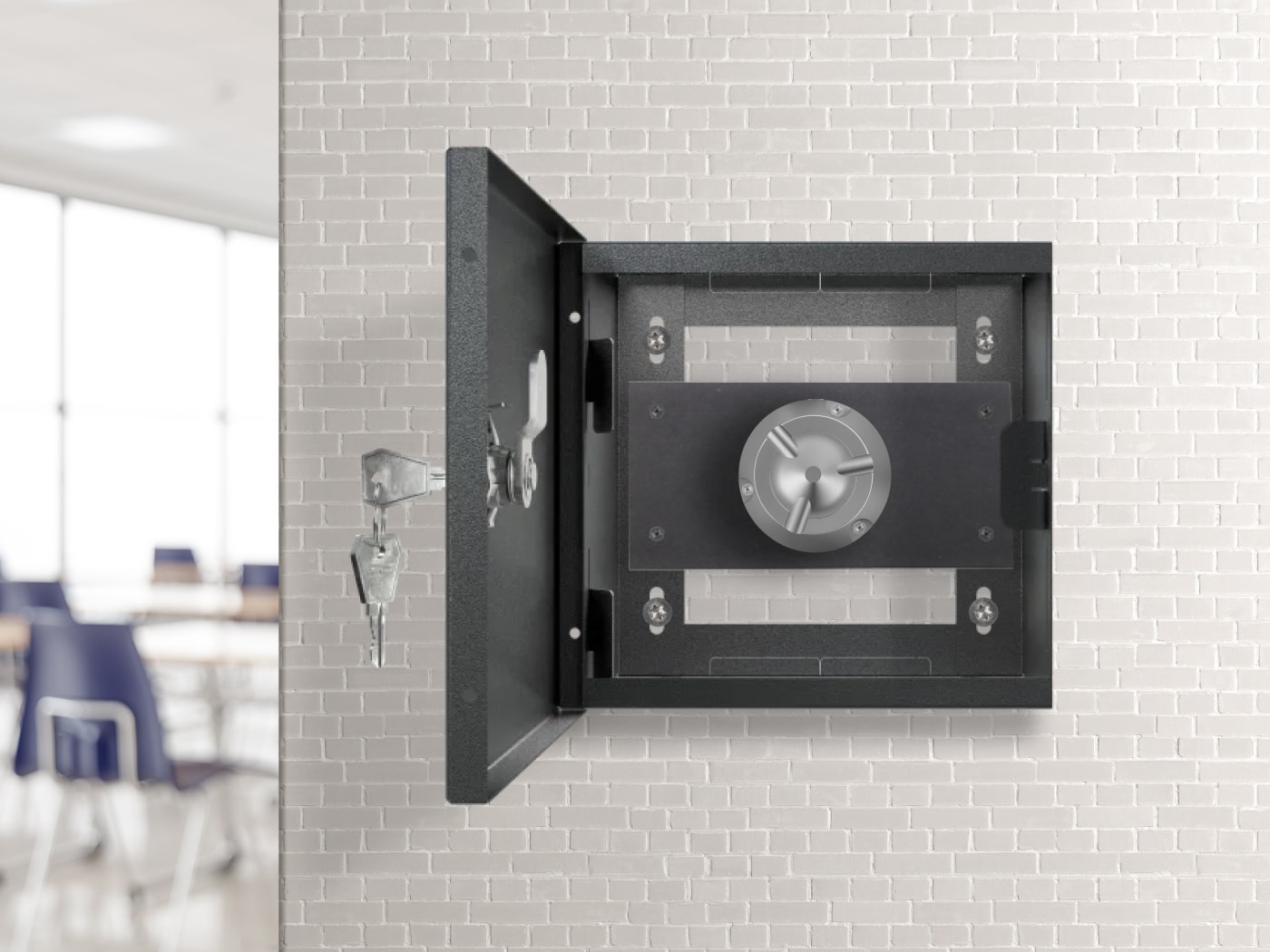
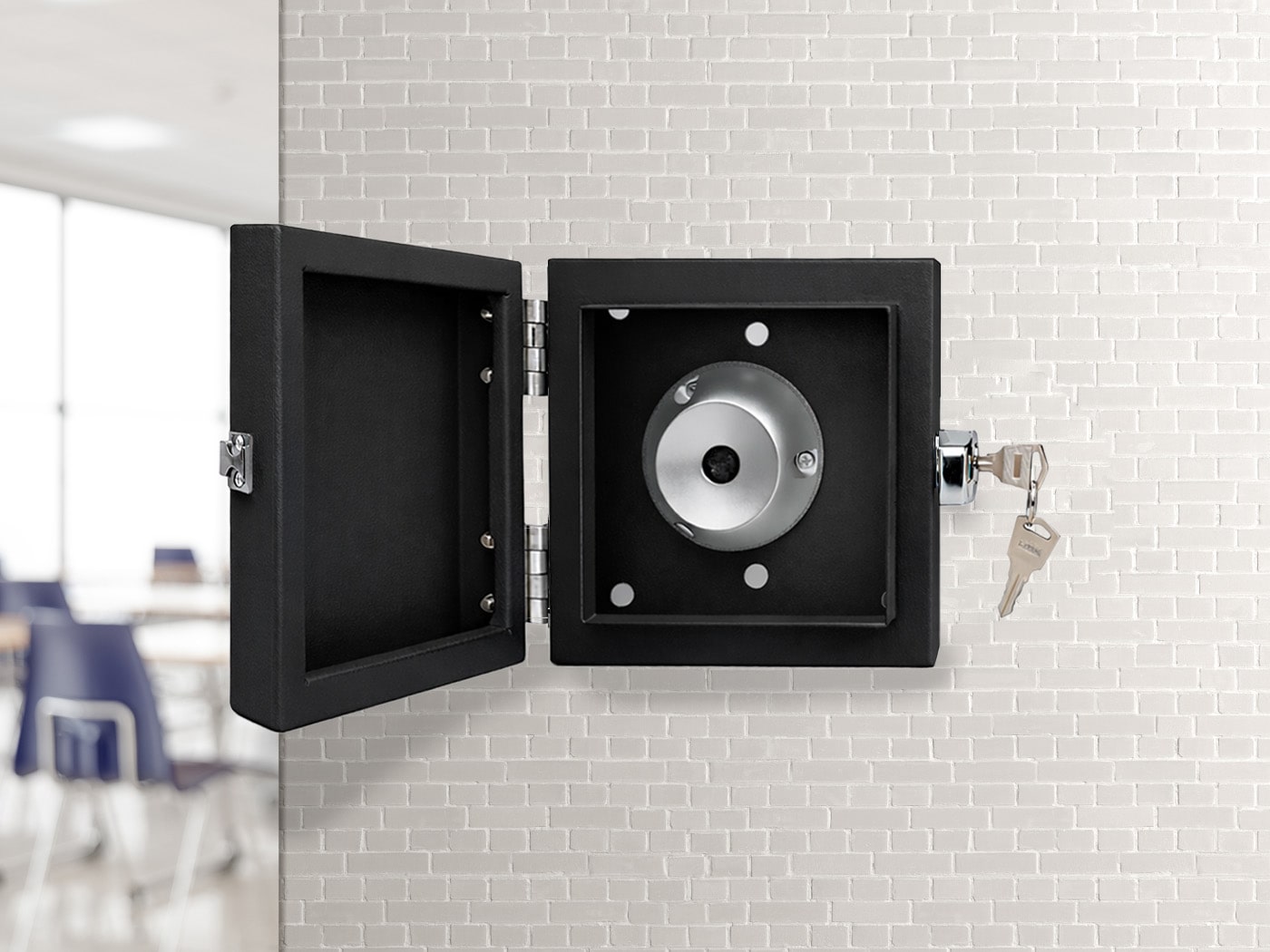
Our lockable magnetic opener for the wall.
.jpg)
Opener with wall mount
Our magnetic opener with mounting plate for the wall.
.jpg)
Basic Opener
Magnetic opener for mobile use or wall mounting.
.jpg)
Mobile Opener
Opener with handle for mobile use.
Cell phone-free zones are the future
The topic of mobile phones at work is not going away. On the contrary: With the increasing fusion of professional and private life, the question of how companies manage smartphone use is becoming increasingly relevant. A pure mobile phone ban is legally possible, but in practice it has limits.
Modern companies therefore rely on solutions that balance productivity, safety and employee satisfaction. LOCKSTA offers exactly that: a physical, easy-to-implement solution that creates cellphone-free zones without creating confrontation. The smartphone stays with the employee, distraction is eliminated and sensitive areas are protected.
Whether for meetings, factory tours, conferences or entire departments: With LOCKSTA, you as an employer make a decision that has a direct impact on the quality of your work results, the security of your trade secrets and the culture of your company.
.png)
With LOCKSTA mobile phone cases, mobile phone bans can be implemented in an educational wayFotos & Videos verhindert werden
We would be happy to advise you!
Make your company cellphone-free
We are happy to help you set up your cellphone-free zone!




.webp)



Inquire now
Interested in LOCKSTA? Fill out the form now and let us find the right solution for your school together! We'll get back to you as soon as possible.
