
Introducing cell phone cases in schools — The practical guide
This guide shows you step by step how to successfully introduce LOCKSTA mobile phone cases at your school: from the initial decision to financing to a well-rehearsed school routine. The basis is the experience of over 300 schools that already use LOCKSTA on a daily basis.
.jpg)
.jpg)
Guide to mobile phone cases introduction
The way to cellphone-free school
This guide shows you how to use the LockStA system In just a few weeks, a stress-free, focused learning environment create — legally secure, educationally valuable and cost-effective.
1. Cell phone cases for schools: The why?
The smartphone is the biggest disruptive factor in teaching. studies show: Students receive an average of 237 notifications per school day. The PISA study shows that cell phone use in class measurably reduces performance. At the same time, cyberbullying and secret filming in schools are on the rise — 24.5% of young people report risky social media use during school hours.
Whether cell phone bans in schools, Smartphone protection zones in Hesse or individual Mobile phone regulations in NRW — the political direction is clear: Smartphones must be released in class. But a ban alone is not enough. Schools need a practical solution that works in everyday life. No collection box with liability risk. No expensive infrastructure. It's a system that every student uses independently.
2. The roadmap: The steps for a successful implementation
A uniform approach and a clear concept ensure acceptance of the system by parents, students and colleagues.
Step 1: Decision and Educational Foundation
Before the first cell phone cases are distributed, the basis must be in place. Three elements determine success: a clear decision, a precise set of rules and open communication with all parties involved.
- Decision: Get the school conference, the college and ideally the parent representatives on board early on. A resolution, which is supported by all committees, creates the basis for sustainable acceptance. Experience has shown that schools that enforce the decision “from above” are met with significantly more resistance — particularly from parents and in high school.
- Embed rules in school regulations: Define precise rules and incorporate them into school regulations. The clearer the guidelines, the fewer discussions there are in everyday life. Your set of rules should answer the following points:
The principle: The mobile phone case takes pressure off teachers and students alike. Students are freed from the constant temptation (“fear of missing out”), while teachers can concentrate on their core task again.
Step 2: Financing & Procurement of Cell Phone Cases
The LOCKSTA system is an investment in better education and a more harmonious everyday school life. Clarify the reimbursement of costs at an early stage.
Model A — school board or school budget
advantage: No costs for parents, maximum acceptance, uniform equipment.
Model B — Parental Funding
advantage: Relieves the school budget, students take responsibility for their own materials.
Experience shows that even paid cell phone cases are treated significantly better and lead to fewer incidents
Model C — Sponsorship and Funding
3. The daily routine
The LockStA system focuses on personal responsibility rather than monitoring. Unlike cell phone garages, cell phone safes or central collection boxes in the classroom, the cell phone bag is treated like a school book or calculator — it is the student's personal work material. No collecting, no spending, no liability risk for the school.
1. The principle: “Bring Your Own Pouch”
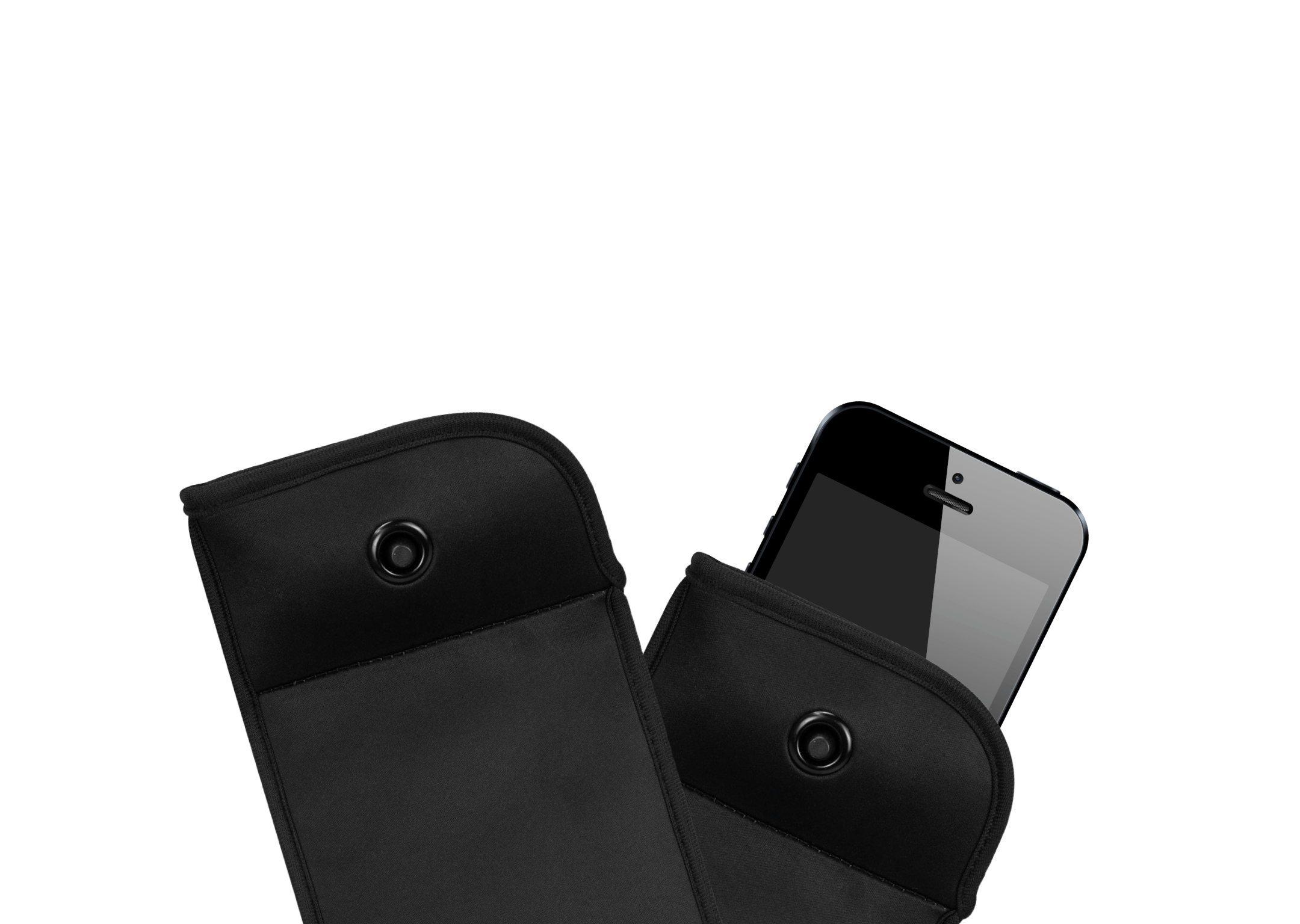
Each student receives their own LOCKSTA mobile phone case. He is responsible for the condition and for bringing them along on a daily basis. Each bag has space for an individual name tag for clear identification.
- Responsibility: Each student receives their own bag. He is responsible for the condition and for bringing them along on a daily basis. Each LOCKSTA bag has space for an individual name tag for clear identification.
- Routine in the morning: Before entering the school building (or at the latest before the first hour), the mobile phone is self-employed muted, put in the pocket and closed.
- storage: The locked bag remains in the student's possession (in the backpack or in the pocket) throughout the school day.
2. Educational flexibility: use in class
A complete ban on digital devices is not up to date — nor is it necessary. The LockStA system allows the targeted, controlled use of smartphones as a learning tool:
Approval for lessons:When smartphones are needed for research, a video project, a survey app or an AR application, the teacher opens their bags with the mobile opener. At the end of the digital phase, cell phones are locked again directly in the classroom.
The effect: The smartphone is changing from a permanent disturbance factor to a targeted work tool. Students learn that the device is not a toy, but an instrument — which can be switched on and off consciously. This approach promotes media literacy far more than a strict total ban.
All LOCKSTA products and opener variants
3. The safety net: Samples & consequences
Since cell phone cases are not collected centrally, visual checks are an important element. They signal that the rule applies and is enforced.
- The visual inspection: Teachers can ask at the beginning of a lesson or on a random basis in between: “Please show the closed bag briefly.” It takes a few seconds and quickly becomes routine. In practice, occasional checks in the first few weeks are sufficient, after which the standard is established.
- Dealing with “forgetters”: If a student has forgotten their bag at home, they cannot use the system that day. As a result, the smartphone is handed over to the secretariat or teachers' room for that day. Experience shows that this scenario hardly ever happens after a short period of familiarization. Bringing the bag is becoming a habit because students want to “keep” their cellphones.
- Attempts to deceive: If empty pockets are closed (while the mobile phone is in the jacket pocket, for example), dummies are used or force is used, the school's regular catalog of measures applies. Admonition, reprimand, parental discussion. Consistency and consistency are crucial here.
4. End of school: Check-out
The school day ends in an uncomplicated way. There are permanently installed LOCKSTA wall openers at the exits of the school building or teachers from the last lesson can open cell phone cases. When leaving school, each student opens their bag independently as they pass by and can use the device freely again. The entire process takes a few seconds and does not cause traffic jams, even with larger numbers of students.
Measuring over the long term: What is changing
Schools that use LOCKSTA report concrete improvements that can be seen after a few weeks:
- concentration: Fewer distractions in class, longer attention spans
- Discipline: Significantly fewer conflicts due to mobile phone use, fewer disciplinary measures
- Cyberbullying: Fewer incidents during school hours because cell phones are not accessible in class
- Teacher satisfaction: Fewer interruptions, fewer discussions, more lesson time
- Social contacts: Students interact more with each other during breaks instead of looking at screens
Practical tip: Before the introduction, conduct a short survey with the college (e.g. “How often are you bothered by cell phone use per hour?”) and repeat this after 8 weeks. Specific figures are the strongest argument for continuation and communication with parents and school authorities.
.png)
With LOCKSTA mobile phone cases, mobile phone bans can be implemented in an educational way
We would be happy to advise you!





.png)
.png)



Inquire now
Interested in LOCKSTA? Fill out the form now and let us find the right solution for your school together! We'll get back to you as soon as possible.
